Lightening GEL
For Groin & Armpit
Evenness of skin texture, tone and uniformity of color are top beauty issues that encourage people, especially women, to use skin lightening products. There are several reasons why a person may experience a darkening of the skin. Some of these reasons may include:
Chafing, thin, itchy and discolored skin caused by inner thighs friction.
Hormonal imbalance, hormonal changes occur during lactation, pregnancy or menstruation.
Certain medications, hormonal oral contraceptives or certain chemotherapy medications.
Sun exposure, overexposure triggers melanin production.
Dry skin, causing dark patches on the skin.
Friction, caused by tight clothing.
Acanthosis nigricans, treatable skin
disorder characterized by dark patches.
Fungal infection, fungs interfere the normal pigmentation resulting discolored patches.
Heretical, dark skin problem runs in families.
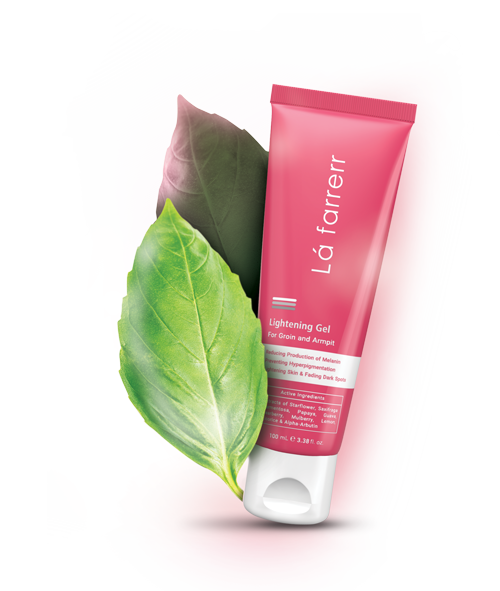
Lafarrerr lightening gel is formulated to address discolored areas, reduce dark spots and enhance overall appearance, specifically in both intimate and sensitive skin areas. Its active ingredients will help to regulate melanin formation and correct excess pigmentation caused by hormones, tanning, hair removal and etc.
Lightening Gel Advantages
Reducing Melanin Production
Improving Skin Tone Uniformity
Improving Overall Appearance
Reducing Dark Spots on the Body
Lightening Body & Private Parts
Moisturizing & Refreshing the Skin
Nourishing Skin in a Sensitive Area
Active ingredients

Starflower Extract

Tara Extract

Alpha-Arbutin

Saxifraga Sarmentosa Extract

Papaya Extract

Guava Extract

Licorice Extract

Mulberry Extract

Hypoxis Rooperi (Starflower) Rhizome Extract:
Hypoxis Rooperi is a medicinal plant native to South Africa in the Hypoxidaceae family. It is an ideal skin lightening ingredient that decreases melanin synthesis by the combined actions of reducing tyrosinase activity and inhibiting the expression of tyrosinase itself. In addition, it has excellent properties for anti-photoaging products due to its antioxidant activity and collagen boosting properties. As shown in Fig.1 and 2, treatment of B16 basal melanocytes with purified Hypoxis Rooperi Rhizome extract resulted in a decrease in tyrosinase expression for 24 hours [1].
- In vitro study

Fig 1. Western blot analysis of tyrosinase expression on B16 melanocytes [1]
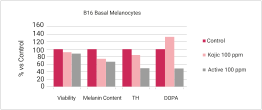
Fig 2. The effect of active fraction from Hypoxis Rooperi on basal B16 melanocytes [1]
Caesalpinia Spinosa (Tara) Extract:
Caesalpinia Spinosa, commonly known as Tara, is native to Peru. Its extract contains tannins and polyphenols, so it has the natural ability to inhibit melanin production. As shown in Fig. 3 Ceasalpina Spinosa extract has demonstrated efficacy in reducing melanin content and has shown potential as a novel ingredient for skin lightening products [2].
- In vitro study
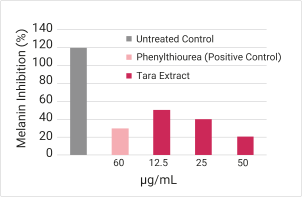
Fig 3. Tara at 25 µg/mL shows a similar effect on inhibition of melanin when compared to the known positive control, while Tara at 50 µg/mL shows significant melanin inhibition when compared to the phenylthiourea (positive control) [2].
A Synergic Effect of the Blend of Hypoxis Rooperi Rhizome Extract and Caesalpinia Spinosa Extract:
The results illustrated in Table 1 show that the synergistic effect of Hypoxis Rooperi Rhizome extract and Caesalpinia Spinosa extract resulted in a significant decrease in tyrosine hydroxylase (TH) and dopa-oxidase activities when compared to kojic acid, which had little effect at that low concentration [1]. Furthermore, the melanin content for this blend was lower than kojic acid, with this effect being even more noticeable in Alpha-Melanocyte Stimulating Hormone (α-MSH) treated cells.
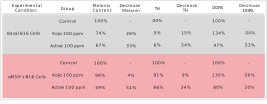
Table 1. Effect of active fraction from a blend of Hypoxis Rooperi Rhizome extract and Caesalpinia Spinosa extract on B16 basal melanocytes [1].
Alpha-Arbutin
Alpha-Arbutin blocks epidermal melanin synthesis by inhibiting enzymatic oxidation of Tyrosine and Dopa [3]. This effect was achieved without affecting the mRNA expression of the enzyme in cultured human melanoma cells and a three-dimensional human skin model [4]. The human skin model was grown with α-arbutin, and melanin generation was found to be reduced after α-arbutin treatment, as shown in Fig.4 [3]. In addition, a clinical study on 80 Chinese women found that α-Arbutin 1% resulted in a faster and more dramatic skin lightening effect after one month compared to regularly used skin lightening components at 1% use levels (Fig. 5) [5].
- In vitro study
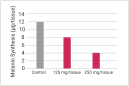
Fig 4. Effect of α-Arbutin on melanin synthesis in a cultured human skin model [3].

Fig 5. The classification of lightening single components according to the magnitude of their specific effect after one month [5].
Saxifraga Sarmentosa, Papaya and Guava Extracts:
The complex of Saxifraga Sarmentosa, Papaya and Guava Extracts, inhibit tyrosinase enzyme activity. According to a study, skin therapy using Saxifraga Sarmentosa, Papaya and Guava extracts are more than three times more effective than kojic acid to prevent melanin formation (Fig. 6). The chromametry assessment of ∆L* & ITA° on the face & the untreated neck control site revealed that the whitening efficiency of 2% mixture of Saxifraga Sarmentosa, Papaya and Guava extracts is considerably better than 2% kojic acid in another investigation on 32 Indian ladies ages between 30-60 (Fig. 7) [6].In vitro study
- In vitro study

Fig 6. 0.001% complex of Saxifraga sarmentosa, Papaya and Guava extracts, inhibits 90% melanin synthesis. This complex is more effective than kojic acid [6].
- In vitro study
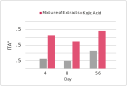
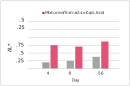
Fig 7. Chromametry measurement of ∆L* & ITA° on the face & the untreated neck control site. whitening efficacy of 2% of the mixture of Saxifraga sarmentosa, Papaya and Guava extracts vs. 2% kojic acid [6].
Glycyrrhiza Glabra (Licorice) Root extract:
Licorice extract comes from the root of Glycyrrhiza Glabra. Glabridin, a component of licorice, is a tyrosinase inhibitor that was shown to reduce UVB pigmentation and erythema [7]. Glabridin is the main ingredient in the hydrophobic fraction of licorice extract that has two different inhibitory effects on the skin, one on melanogenesis and the other on inflammation [8]. The effect of glabridin on melanin content is investigated with B16 melanoma cells (Fig. 8). The results revealed a considerable decrease in melanin concentration after a 3-day culture with a spectrophotometer at 400 nm [8]. As shown in Fig. 9, the number of epidermal DOPA positive melanocytes/mm2 is also reduced by glabridin.
- In vitro study
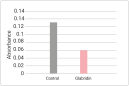
Fig 8. Effect of glabridin on melanin contents of B16 melanoma cells [8].
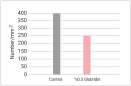
Fig 8. Effect of glabridin on melanin contents of B16 melanoma cells [8].
Morus Alba (Mulberry) Root Extract:
Mulberry extract is a natural potent antioxidant from the Morus alba plant. It was reported that Mulberry is rich in flavonoids, which act as a tyrosinase activity inhibitor. The study showed that the flavonoids found in Mulberry have a structure similar to the dihydroxyphenyl group of DOPA, thus enabling it to inhibit the tyrosinase enzyme activity at the distal portion of the melanogenesis pathway. As shown in Fig. 10, from baseline to week 8, the mexameter value for the Mulberry extract oil group decreased compared to placebo group, demonstrating a lightening of the pigmentation [9].
- In vitro study
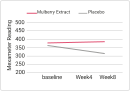
Fig 10. Mexameter values for the Mulberry Extract oil group over 8 weeks vs. placebo [9].
Bearberry extract is a skin lightening agent that fades age spots, brightens the skin and increases skin luminosity or radiance [10]. It also demonstrates antimicrobial, anti-inflammatory and antioxidant properties [11]. The effect of a 50% methanolic extract from Bearberry leaf on melanin synthesis was investigated in vitro [12]. The results suggest that Bearberry leaf extract had an inhibitory effect on tyrosinas activity, as illustrated in Fig. 11.
- In vitro study

Fig 11. Effect of the product containing Bearberry extract on the enzymatic activity of tyrosinase on the skin explant. A) The product containing Bearberry extract almost totally inhibits pigmentation. B) The control shows no inhibition of pigmentation [10].

Citrus Limon (Lemon) Extract:
Lemon extract shows a significant antioxidant activity that is responsible for preventing melanin biosynthesis. This is due to the presence of principle bioactive compounds, including hesperidin and ascorbic acid, abundantly found in the peel of lemon fruits [13]. Various components of citrus peel extract (CPE) are also suggested to exert inhibitory effects in skin aging through diverse mechanisms, including inhibition of collagenase activity, induction of procollagen synthesis, anti-inflammatory activity and inhibition of melanogenesis [14]. The result of its inhibitory effect in Fig. 12 reveals that the inhibitory activity of tyrosinase after treatment with citrus peel extract was shown to be higher than that of kojic acid at high doses.
- In vitro study

Fig 12. Inhibitory effect of citrus peel extract (CPE) against tyrosinase activity [14].

Niacinamide (Vitamin B3):
More recent studies have noted beneficial effects of topical niacinamide in aging skin, such as improved barrier function, decreased appearance of signs of facial photoaging (e.g., texture, hyperpigmented spots, red blotchiness) and reduced sebum production [15]. In addition, it has been demonstrated to inhibit the transfer of melanosomes to epidermal keratinocytes [16]. The effect of Niacinamide on facial skin red blotchiness and hyperpigmented spot area was shown in Fig. 13 and 14, respectively.
- In vitro study

Fig 13. Effect of topical 5% Niacinamide on facial skin red blotchines vs. the placebo control [15].
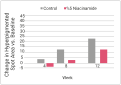
Fig 14. Effect of topical 5% Niacinamide on hyperpigmented spot area (mm2) in facial skin vs. the placebo control [15].

Vitamin A:
Vitamin A derivatives are lipid-soluble compounds, including retinol, retinal, retinyl acetate, retinyl linoleate and retinyl palmitate (RP) [17]. Vitamin A has a lightening property on human skin. For this reason, it has been used to treat hyperpigmented lesions [18]. As shown in Fig. 15, a reduction in melanin content of B16 melanoma cells after five days of Vitamin A treatment was reported [19]. Significant improvement in Vitamin A-treated patients was also reported in another investigation on the overall response of melasma to Vitamin A (Fig. 16) [20].
- In vitro study
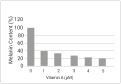
Fig15. Melanin content of B16 melanoma cells after five days of treatment with Vitamin A and stimulation with a-MSH (10 nM) [19].
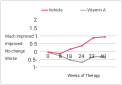
Fig 16. The overall response of melasma to Vitamin A or vehicle [20].
References
[1] www.Provitalgroup.com/ https://www.weareprovital.com/en/careactives/darkout
[2] Rebecca Miller, Jatinder Rana, Johnson Han, Teric Li, Yingqin Li, Sara Shen, Ganesh Diwakar, and Jeffrey Scholten, 2013. Skin Lightening Activity of Aqueous Extract of Ceasalpina spinosa (Tara). Analytical Sciences, Amway; Shanghai R&D, China; Concentrate Development, California.
[3] Sugimoto, K., Nishimura, T., Nomura, K., Sugimoto, K. and Kuriki, T., 2004. Inhibitory effects of α-arbutin on melanin synthesis in cultured human melanoma cells and a three-dimensional human skin model. Biological and Pharmaceutical Bulletin, 27(4), pp.510-514.
[4] Zhu, W. and Gao, J., 2008, April. The use of botanical extracts as topical skin-lightening agents for the improvement of skin pigmentation disorders. In Journal of Investigative Dermatology Symposium Proceedings (Vol. 13, No. 1, pp. 20-24). Elsevier.
[5] http://skinmtx.com/science/alpha-arbutin/
[6] www.BASF.com: Technical Data Sheet
[7] Obagi, S. and Gandhi, R.K., 2017. Skin Rejuvenation and Resurfacing. In Maxillofacial Surgery (pp. 1286-1301). Churchill Livingstone.
[8] Yokota, T., Nishio, H., Kubota, Y. and Mizoguchi, M., 1998. The inhibitory effect of glabridin from licorice extracts on melanogenesis and inflammation. Pigment cell research, 11(6), pp.355-361.
[9] Alvin, G., Catambay, N., Vergara, A. and Jamora, M.J., 2011. A comparative study of the safety and efficacy of 75% mulberry (Morus alba) extract oil versus placebo as a topical treatment for melasma: a randomized, single-blind, placebo-controlled trial. Journal of drugs in dermatology: JDD, 10(9), pp.1025-1031.
[10] https://protecingredia.com/brochure/DepigmentationFactor2U.pdf
[11] https://escop.com/downloads/bearberry-leaf/
[12] Matsuda, H., Nakamura, S., Shiomoto, H., Tanaka, T. and Kubo, M., 1992. Pharmacological studies on leaf of Arctostaphylos uva-ursi (L.) Spreng. IV. Effect of 50% methanolic extract from Arctostaphylos uva-ursi (L.) Spreng. (bearberry leaf) on melanin synthesis. Yakugaku zasshi: Journal of the Pharmaceutical Society of Japan, 112(4), pp.276-282.
[13] Katiyar, S., Saify, K., Singh, S. K., & Rai, M., 2014. Botanical study of skin lightening agents. Int. J. Pharmacogn. 1(4), 243-249.
[14] Kim, J.K., Park, N.H. and Hwang, J.S., 2019. Skin Lightening Effect of the Dietary Intake of Citrus Peel Extract Against UV-Induced Pigmentation. Natural Product Communications, 14(6), p.1934578X19859979.
[15] Bissett, D.L., Miyamoto, K., Sun, P., Li, J. and Berge, C.A., 2004. Topical niacinamide reduces yellowing, wrinkling, red blotchiness, and hyperpigmented spots in aging facial skin 1. International journal of cosmetic science, 26(5), pp.231-238.
[16] Hakozaki T, Minwalla L, Zhuang J, et al., 2002. The effect of niacinamide on reducing cutaneous pigmentation and suppression of melanosome transfer, Br J Dermatol, pp.147:20.
[17] Pena-Rodríguez, E., Moreno, M.C., Blanco-Fernandez, B., González, J. and Fernández-Campos, F., 2020. Epidermal delivery of retinyl palmitate loaded transfersomes: Penetration and biodistribution studies. Pharmaceutics, 12(2), p.112.
[18] Sorg, O., Kaya, G., Kasraee, B. and Saurat, J.H., 2010. Retinoids. Cosmetic Dermatology: Products & Procedures, pp.309-318.
[19] Sato, K., Morita, M., Ichikawa, C., Takahashi, H. and Toriyama, M., 2008. Depigmenting mechanisms of all-trans retinoic acid and retinol on B16 melanoma cells. Bioscience, biotechnology, and biochemistry, 72(10), pp.2589-2597.
[20] Griffiths, C.E.M., Finkel, L.J., Ditre, C.M., Hamilton, T.A., Ellis, C.N. and Voorhees, J.J., 1993. Topical tretinoin (retinoic acid) improves melasma. A vehicle‐controlled, clinical trial. British Journal of Dermatology, 129(4), pp.415-421.